Cute rock without the word “girl”
The genre parodies its own surface all too easily. Sometimes it helps to take away the recognizable words and see what’s left.
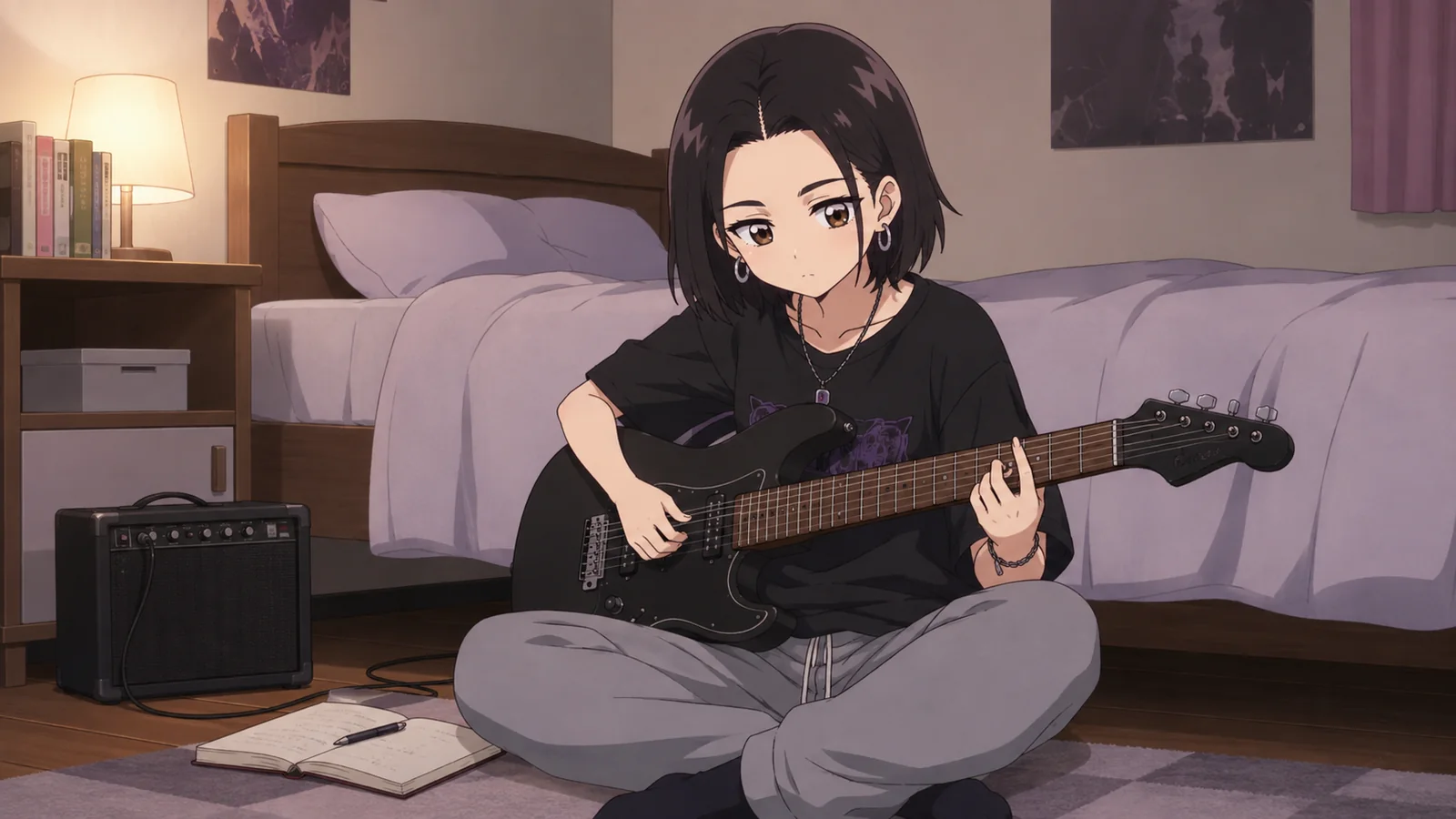
Over time, every genre develops a set of words that announce its name all by themselves. That’s handy for parody and dangerous for an actual song.
When the marker writes for the author
“Girl,” “bob,” “hearts,” “being ignored,” “internet,” and “pink” can work. Trouble starts when you build a character out of them like an avatar.
We know the hairstyle, the hoodie color, and the favorite messaging app. But we don’t know what the narrator does when they’re angry. We don’t know why they lie to their friend. We don’t know what they’re ashamed of.
Try a temporary ban
Now you have to describe actions. And instead of “a girl with a bob who’s being ignored,” you get a person who arrived before everyone else, ordered tea twice, and told the waiter they were waiting “five more minutes.”
Character is stronger than aesthetics
Memorable in a picture. Runs out quickly in a song.
“Keeps tickets,” “lies about not being cold” — now that’s behavior.
The narrator comes alive when they play a part in their own problem.
What they’ll never say outright is excellent fuel for subtext.
Genre words make a song recognizable. Behavior makes it your own.
The “no costume” exercise
Write a verse and ban yourself from mentioning clothes, hair, age, social media, or music. Only actions and nearby objects are allowed. If you already understand the person after eight lines, the character exists.
The word “girl” is innocent. The genre just shouldn’t depend on it as though it were a license.